Reading Roundup 2025 part 4

Hey all- more of the stuff I read this year.
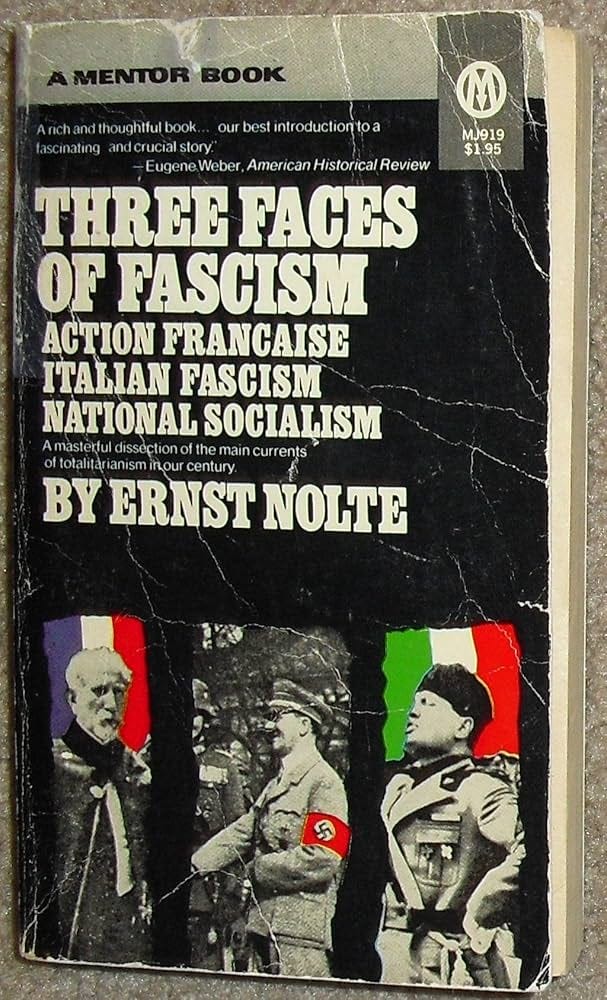
Ernst Nolte, Three Faces of Fascism (1963) - Nolte would gain notoriety as the biggest player on one side of the “historikerstreit” in the eighties, a big argument about German historiography about various ways right-leaning historians, like Nolte, found to elide German responsibility for the war and the holocaust (often through West Germany’s excuse of last resort, anticommunism). This was written at least twenty years before all that. If I were immersed in the touchy atmosphere of West German historiography, maybe I could discern more hints of the Nolte to come, but I’m not. What I will say, as a cultureless American, is that the sophistications of the European critical historiographical tradition can cover a multitude of sins and solecisms, along with making possible some magnificently rich historical texts. Three Faces of Fascism is rich indeed- long, erudite, confidently declarative. I’d argue that the sections on the first two “faces” -- the militant royalists in Action Francaise and Italian fascists — are better than the last one, about Nazism, and that ultimately he’s better as a descriptive writer as a prescriptive one, even though he is highly prescriptive… imperfect but necessary reading for serious students of the history of fascism. ****
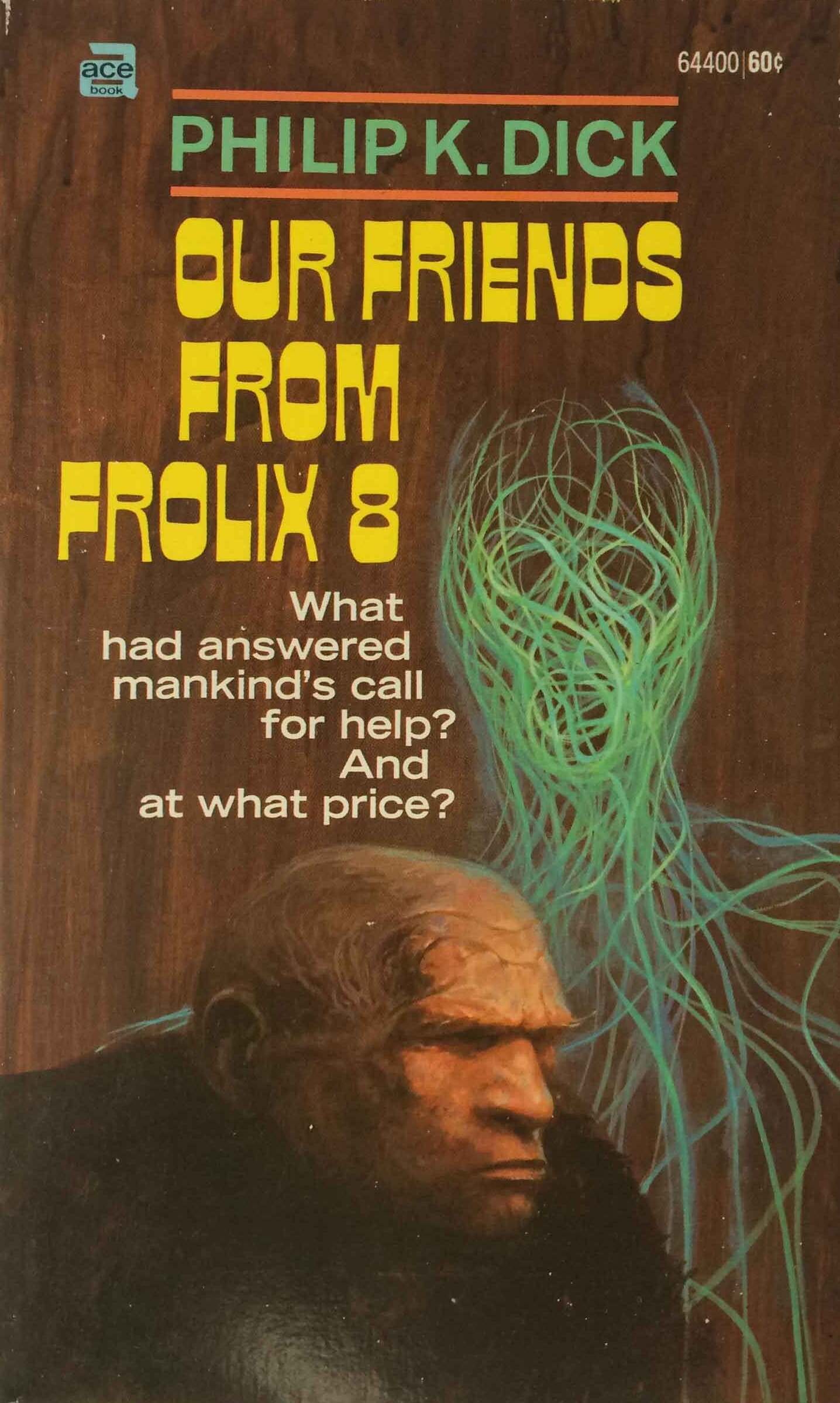
Philip K. Dick, Our Friends From Frolix 8 (1970) - People say this is minor Dick (heh), and I think even PKD himself said this one was cranked out more desultorily than most from a need to pay alimony etc. Well, I’ve read the major Dicks (though could probably use a re-read on many of them). And minor Dick is usually still pretty good, or fun, anyway. In a world where genetically modified mental supermen run the world and lord it over the unmodified, everyone is waiting out the return voyage of the great champion of the unmodified, who went out to space to find help from a classic PKD alien, a giant floating telepathic slime mold. The uber-men are pleasingly non-uber, just as dumb if not more so than regular people, and things proceed accordingly. ****

Elizabeth Moon, Trading in Danger (2003) - If I were a different kind of scifi fan -- and it’s a perfectly acceptable type -- I would say that Trading in Danger is much better than Our Friends From Frolix 8, what with the former’s plot where people do stuff that makes some basic sense, its fleshed out world of spacefaring trade, politics, and war, its characters with comprehensible motives and dialogue, including women who aren’t ball-busting shrews. But... it’s boring. To me, anyway. Plucky young space cadet who’s just too darn decent to avoid being booted from space academy flies a busted old spaceship on what should be a milk run for her space-trader family. Of course, it’s not a milk run, and she winds up in the middle of a space war in a far-off colony system. They’re impounding all the spaceships for the duration, but she’s gotta get her agricultural goods to whichever other Podunk planet to fulfil her contract! She can’t fail her family again if she wants them to take her seriously!!
And somehow, from there, she winds up turning her ship into space jail for all of the captains and crews of other impounded spaceships, because the mercenaries doing the war asked her to. Doing this and then expecting me to think space cadet protagonist lady is still the good guy is way stranger than any PKD setup, in its quotidian way. Especially because protagonist and author act shocked when the space prisoners are so bold as to be mad at protagonist, and even try to escape! It’s ok that protagonist joins the space mercenaries to kill them, though, because the space prisoners complained about sharing food in space jail and were also sometimes sexist towards protagonist. The mercenaries, even if they’re murderous space marine types, are cool, you know, they’re just doing their thing. Don’t get in the way of people in uniform doing their thing if you don’t want to be treated as disposable, I guess! All the vistas that scifi opens up to us and we wind up there, time and time again Lame. **
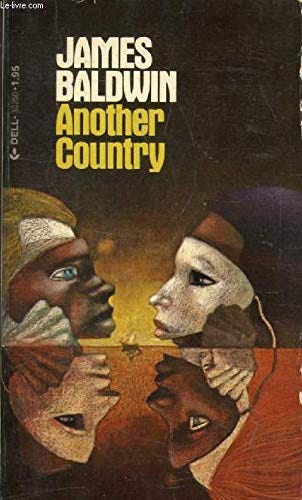
James Baldwin, Another Country (1962) - Suicide, affairs, and literary politicking are the order of the day here. Characters in high modern New York (and to a lesser extent Paris) fall in and out of love, experience despair, misunderstandings across race, gender, and sexuality lines, etc. The novel has all of Baldwin’s characteristic mastery of style and character. Apparently, it was controversial in some circles in its day, and I suppose that makes sense given its frank depiction of same-sex desire at the time, wherein even the supposedly straight men will admit they tried it on with boys when they were boys. It was around this time that Baldwin started getting in trouble from some literary black nationalists, the macho kind who thought that after centuries of racist belittling of black manhood, black writers depicting or living gay life were doing the white man’s work, or something. This came from people who should have known better (Ishmael Reed, who at least admitted he was wrong) and those who made a career out of determinedly not knowing better (Amiri Baraka). It presumably didn’t help matters that Baldwin had, by that time, come to be considered a darling of the mostly-white literary establishment… while most whites would still consider him a scary radical (including, I bet, some of his cocktail party companions). Hard out there to be a black literary star, as Richard Wright (who Baldwin turned on and savagely criticized near the beginning of his ascent) could have told him. Anyway- I write more about the context because I don’t have a lot to say about the novel other than “it’s good, go read it, it’s James Baldwin, he’s good, you surely know that by now.” *****
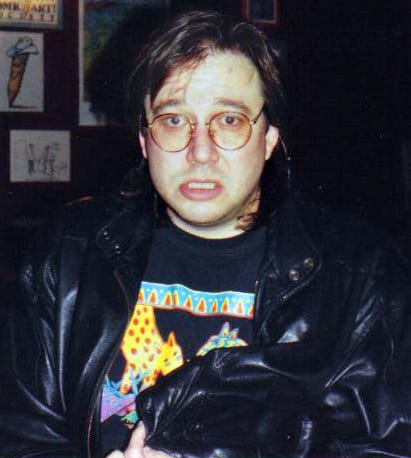
Cynthia True, American Scream: The Bill Hicks Story (2002) - One of the book (or maybe podcast?) ideas I’ve been mooting I call “Preachers and Clowns,” a history of how standup comedians – once considered among the least reputable of entertainers, vaudeville/nightclub scum without even the decency of a real skill like juggling or singing – came to become highly influential and sought-out moral and political figures. To this end, I figure I better get familiar with Bill Hicks, the epochal, besainted Texan comedian who helped redefine the form in the eighties and nineties, only to die in 1994 at age 32. Hicks has a cult, and that cult has a legandarium with well-established stories, tropes, internal controversies, etc. His epigones recycle the stories and talking points endlessly, like cultists do with Elvis, the Beatles, etc. I’ve been trying to read a biography by someone who could best be described as the Ray Manzarek to Hicks’ Jim Morrison: decent enough hippie-dippie sort drawn into the orbit of a charismatic generational talent, basically falls in love with him, and never escapes his orbit, tending his memory for decades past the talent’s premature death. I say “trying” because it is an unbelievably tedious recitation of stoner-y anecdotes that doesn’t get out high school until dozens of pages in (they were high school friends, natch).
Journalist True writes in the shadow of the cult, and while she does some basic journalism to write this pedestrian biography, she never gets beyond cliche in telling this story. I’m resistant to the Saint Hicks thing – frankly, he sounds like he would have been deeply annoying and while you can tell he had a lot of talent, comedy, especially topical comedy, generally ages poorly – but there’s no way he was as boring as True makes him out to be, as she strives to depict how exciting being around Hicks, on stage or in person, was according to most people who knew or saw him. Needless to say, we don’t get much real interrogation of his ideas or materials, either. We learn that he reacted against his staid, church-y, upper middle class suburban Texan background. We also learn that he was both a scabrous critic of what he regarded as popular irrationality – he had a character called Logic Man, a superhero who, quite unironically it seems, owned religious zealots, conformists, etc with his rational arguments – and someone who embraced seemingly every alternate idea system he came across. He was an avid preacher of the benefits of psychedelic, was into UFO stuff, carried a Tarot deck everywhere, etc. This is one of the reasons I see him as an important figure in the story of how we got to where we are. But True doesn’t have much to say about any of this beyond “huh, makes you think, what a cool guy!” Only useful for reference going forward, I think. *’
Mithra says hi